"The discus thrower's wife"
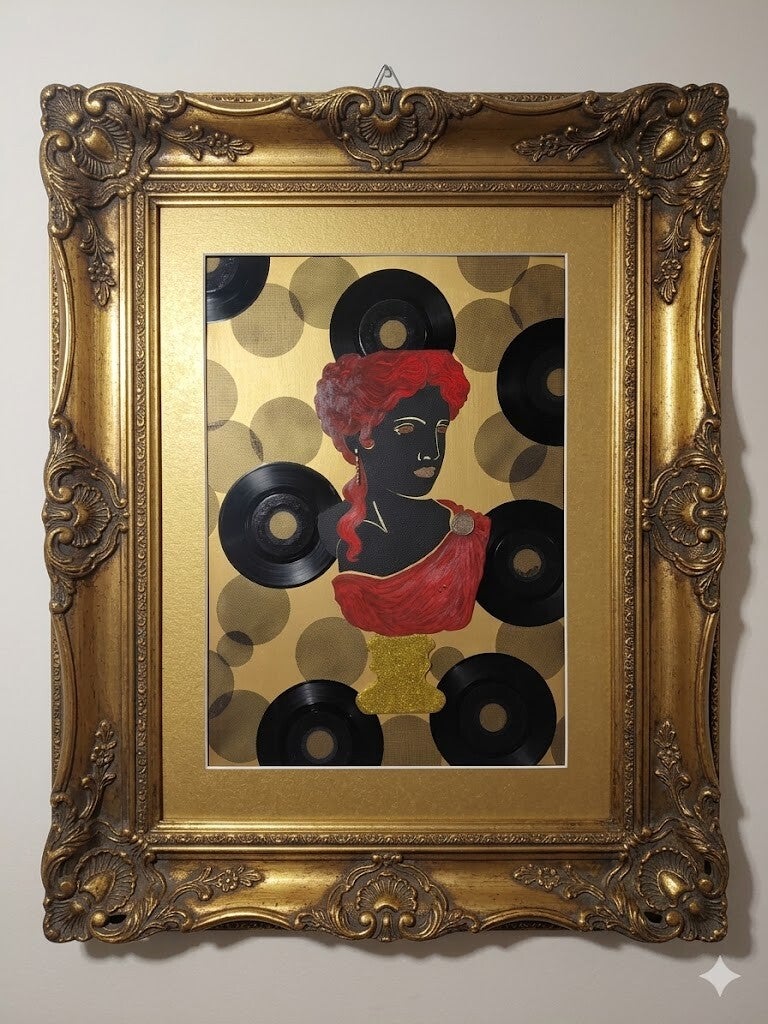
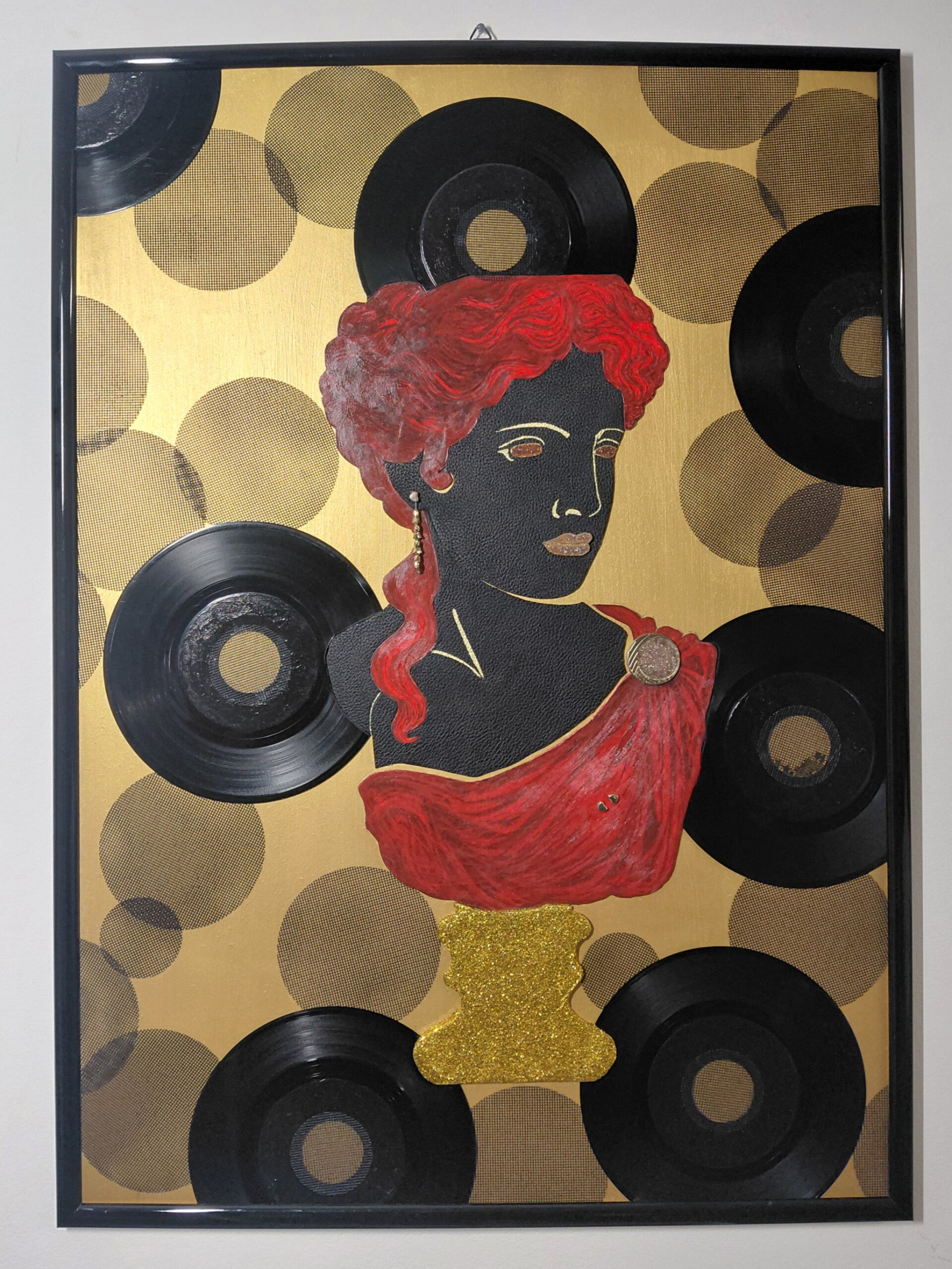
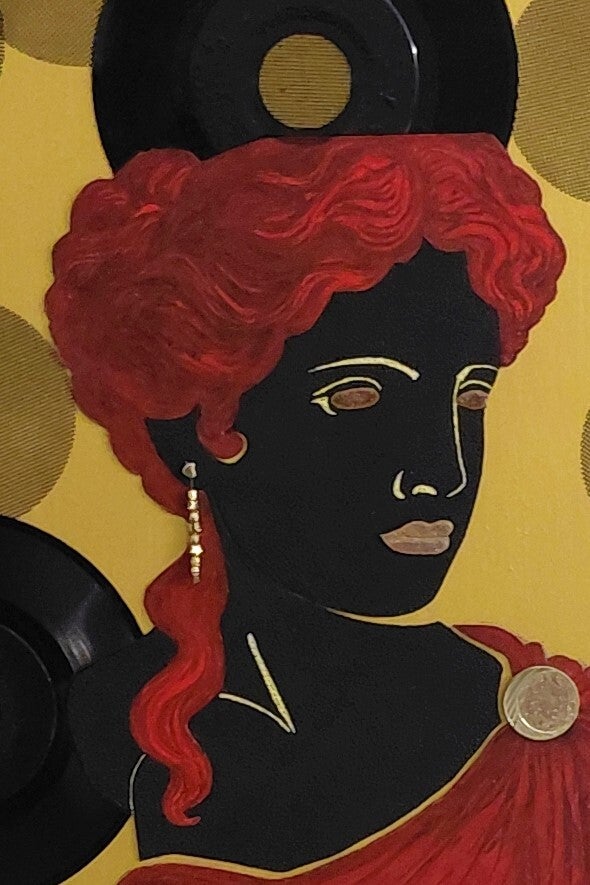
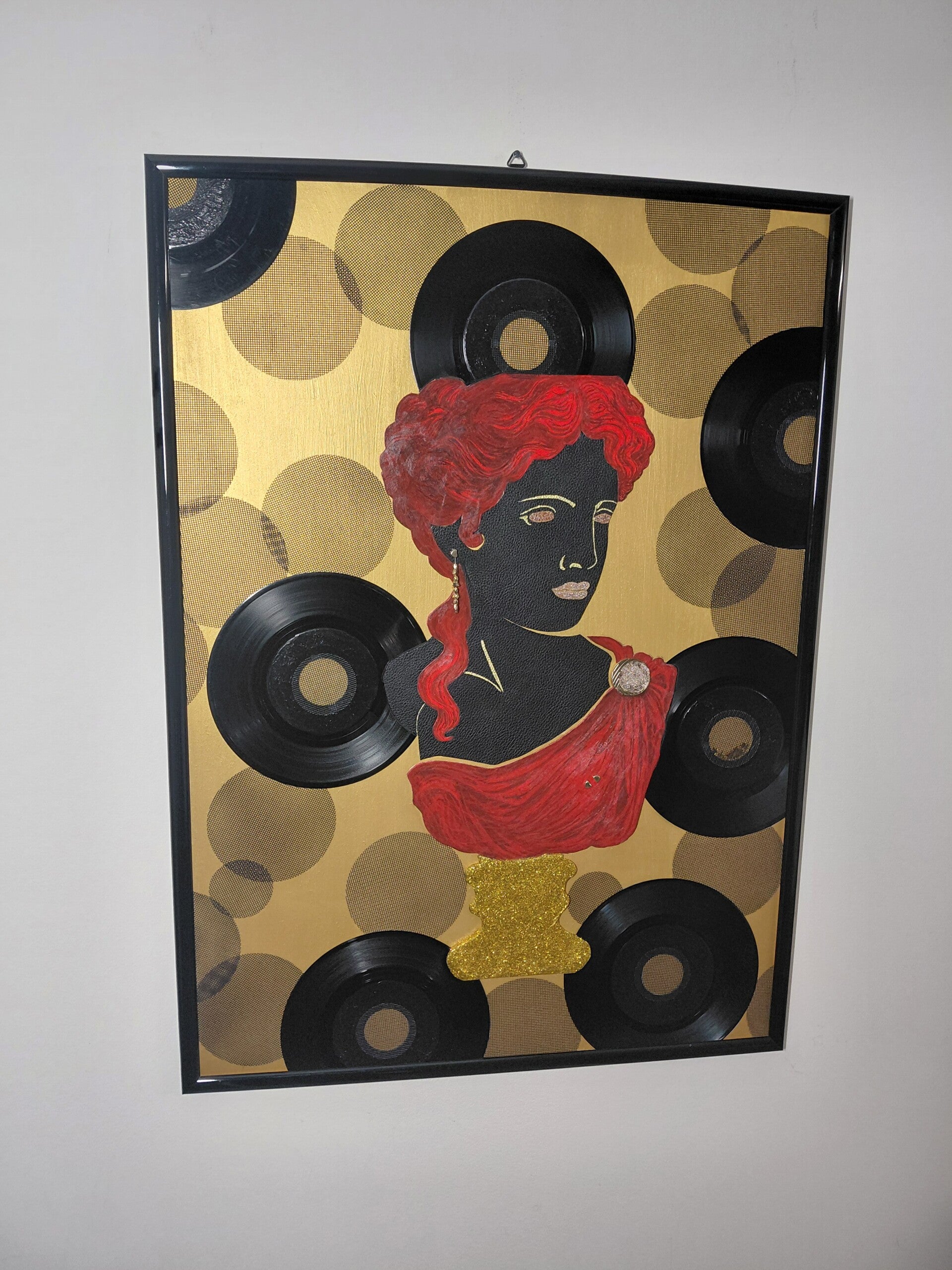

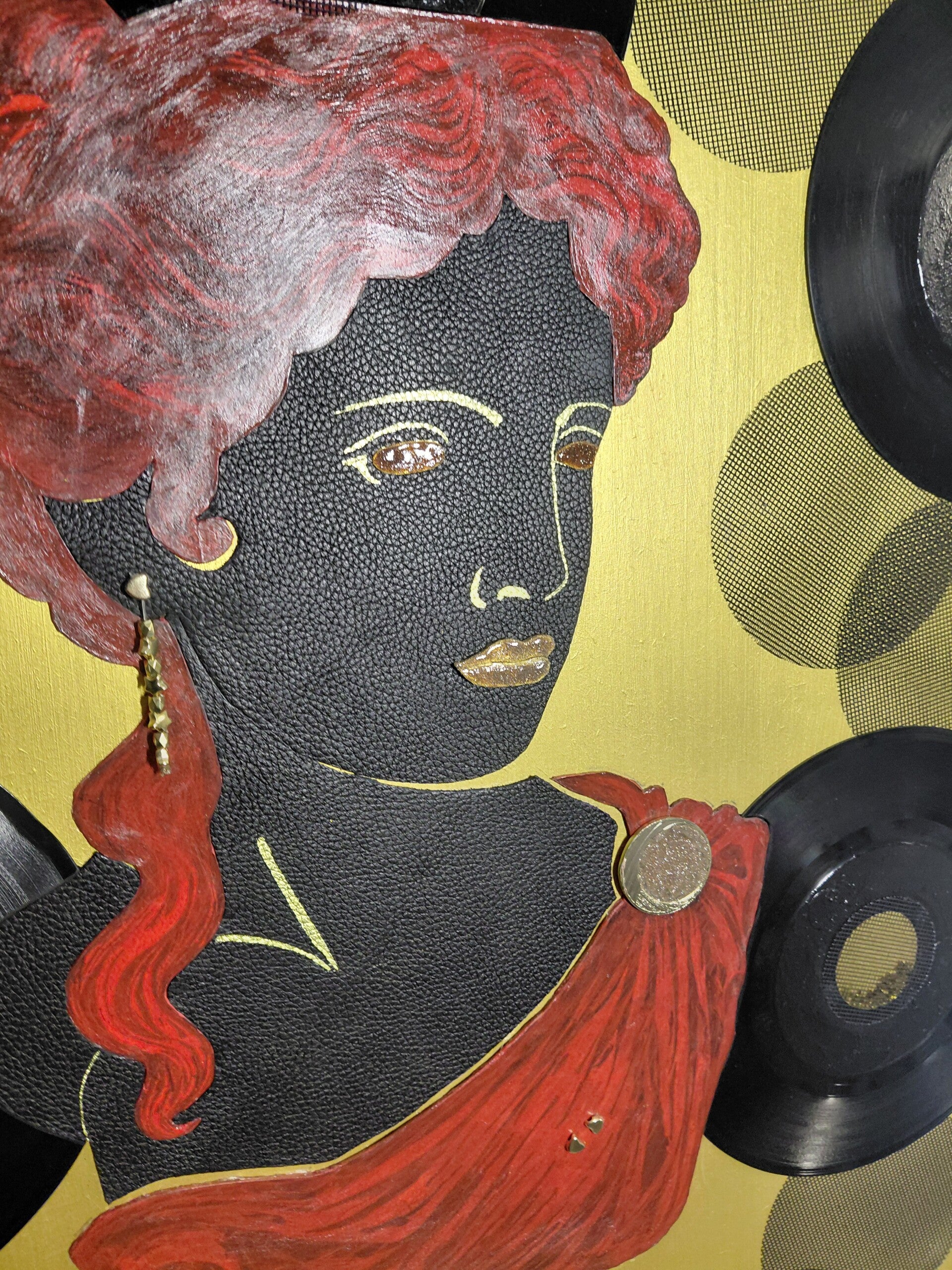
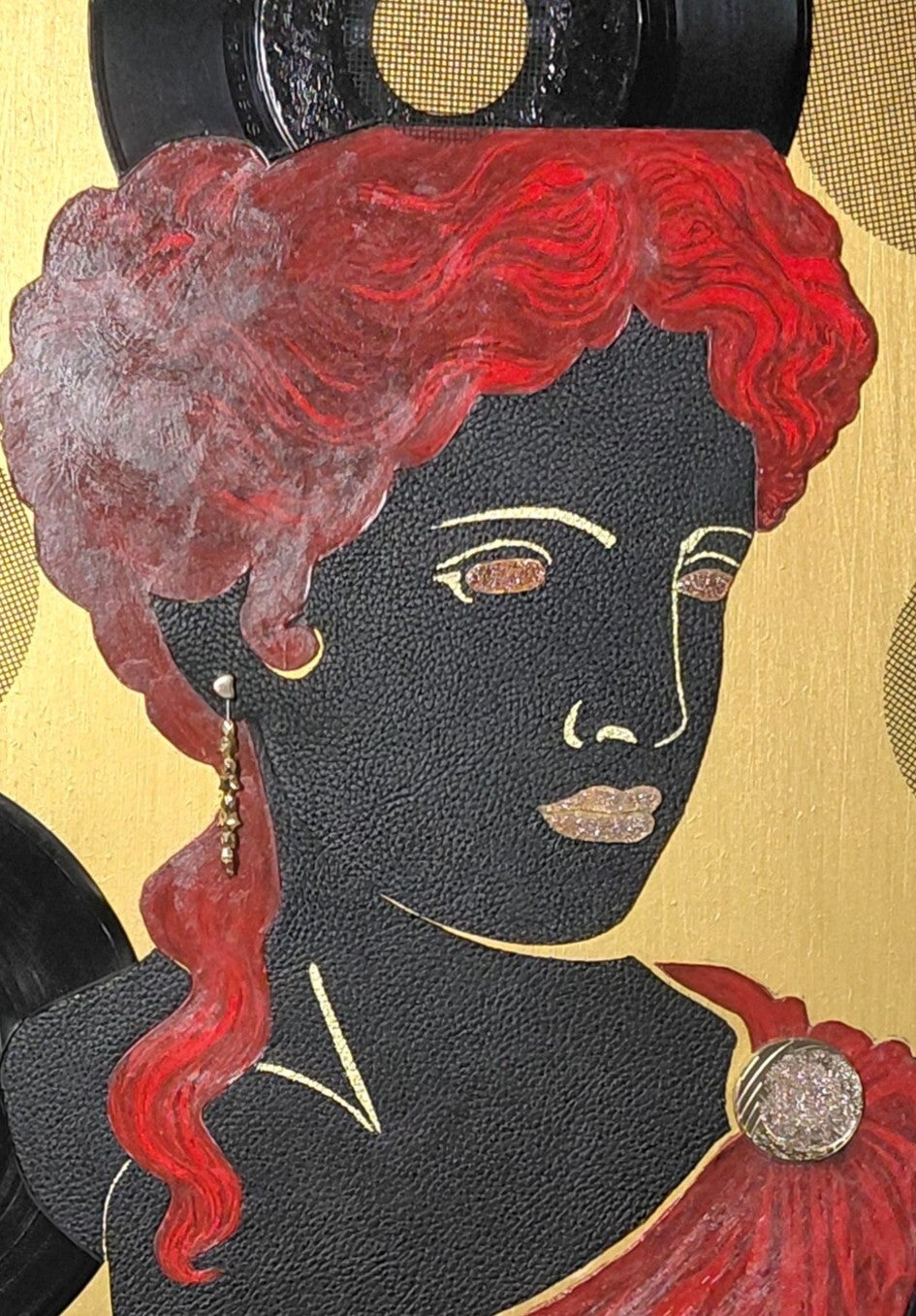

L'artista mantiene intatto il suo riconoscibile codice stilistico – l'unione tra statuaria classica, vinili e silhouette nere e rosse – ma introduce una variazione cromatica e materica:
Rispetto allo sfondo argenteo del primo quadro (The discus thrower), qui domina un fondo dorato caldo e lucente. L'oro, storicamente legato all'arte sacra bizantina e alle opere di Gustav Klimt, conferisce alla figura una dignità quasi regale o divina.
Il soggetto non è più un profilo netto, ma un busto classico tridimensionale, con i capelli raccolti in una complessa acconciatura mossa color rosso acceso, tipica delle rappresentazioni di dee romane o greche (come Venere o Giunone).
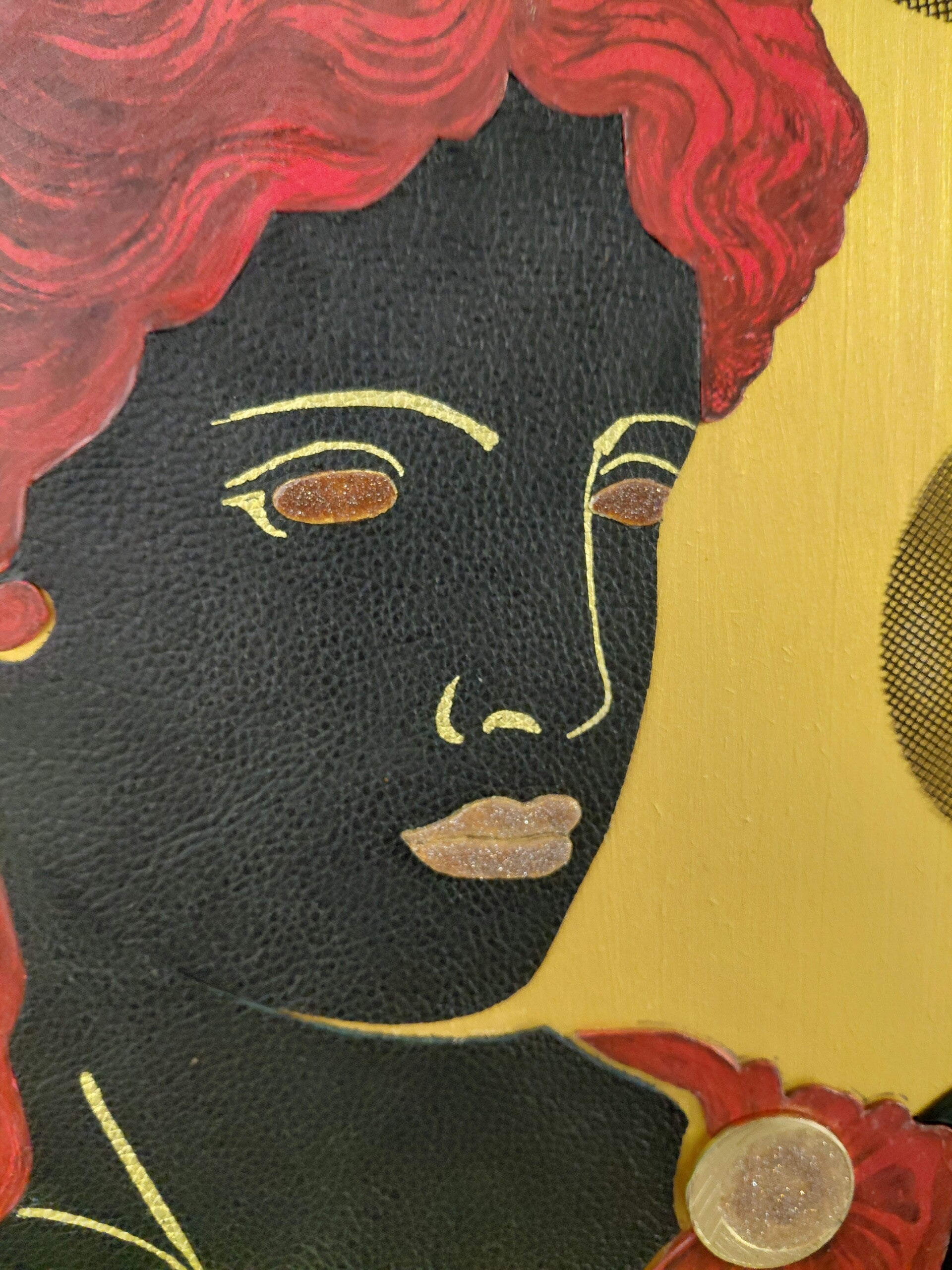
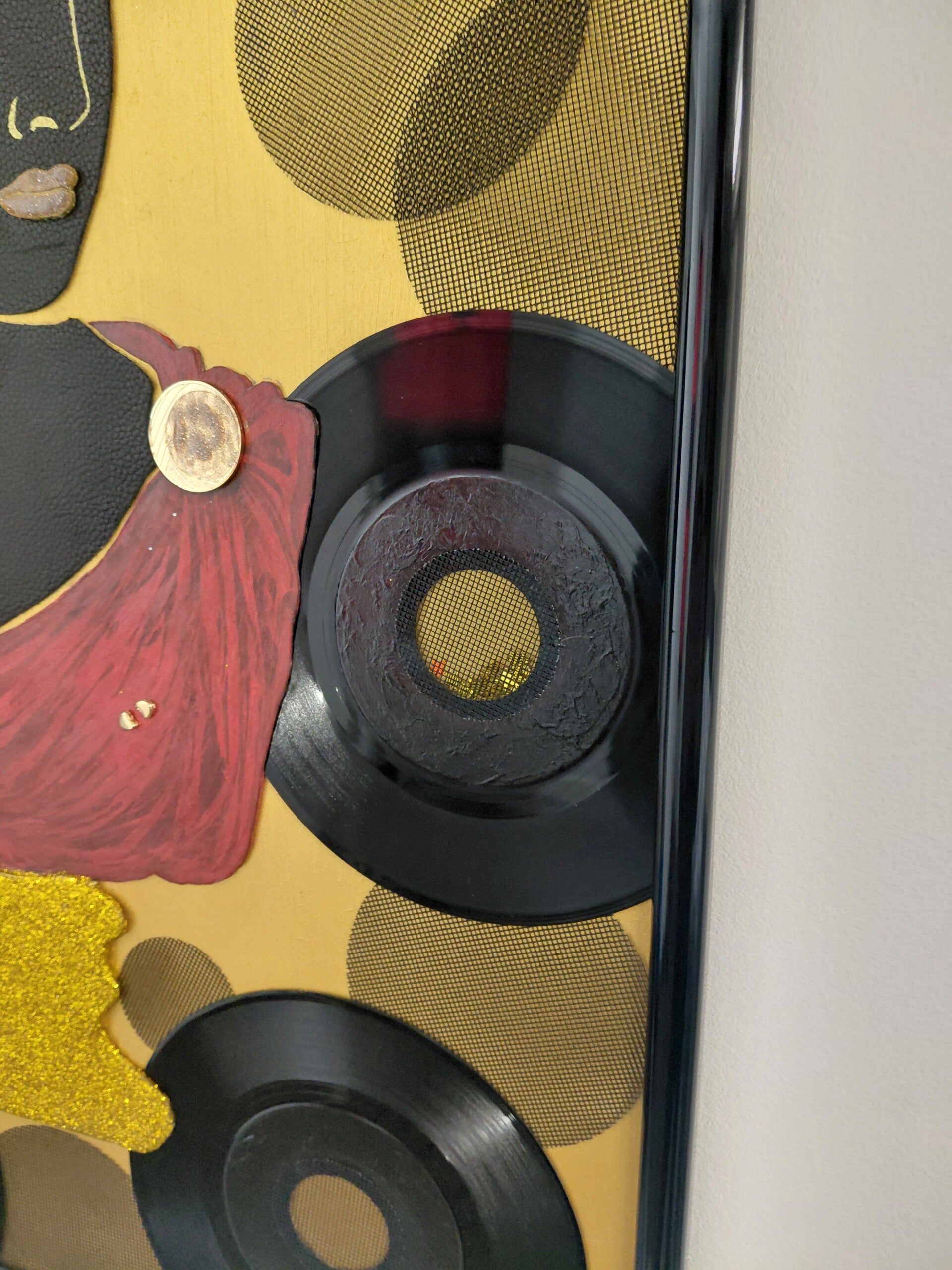
L'artista arricchisce la figura con tocchi di luce texturizzata. La base del busto è interamente ricoperta di glitter dorati, coordinati con il trucco degli occhi e delle labbra. Spiccano inoltre elementi applicati tridimensionali: un vistoso orecchino pendente dorato e una spilla (o fibula) circolare che ferma la veste rossa sulla spalla.
I dischi neri a 45 giri e i cerchi sfumati sullo sfondo continuano a creare quel contrasto ipnotico tra le curve della musica analogica e le geometrie del quadro, ma l'oro di fondo rende il nero dei vinili ancora più profondo e lucido.
Dilan Ianeez gioca con la mitologia e la storia dell'arte inventando una "moglie" per la celebre statua di Mirone. È un'operazione ironica e pop: se lui è il lanciatore di dischi, lei ne condivide lo stesso universo sonoro e visivo.
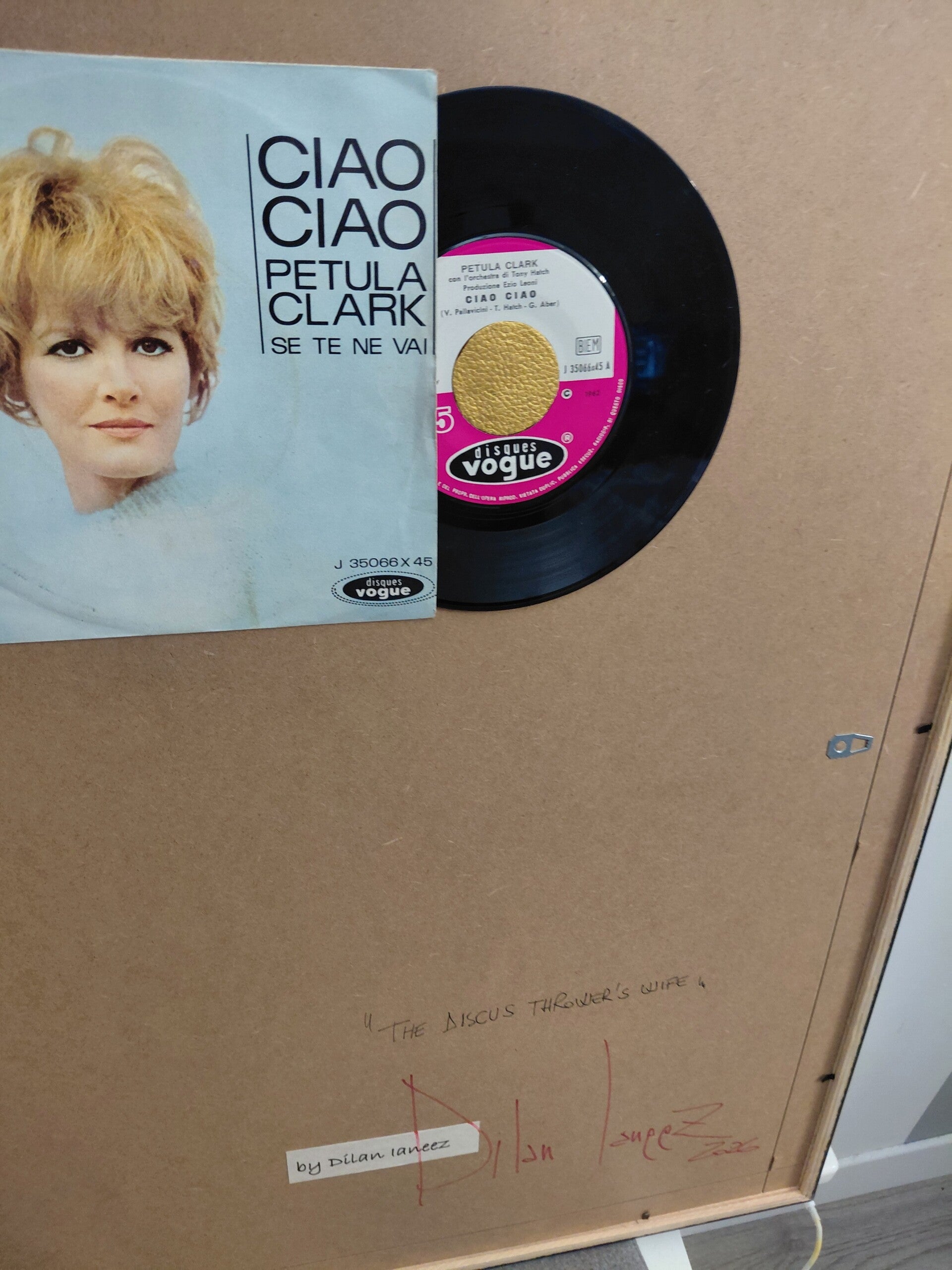
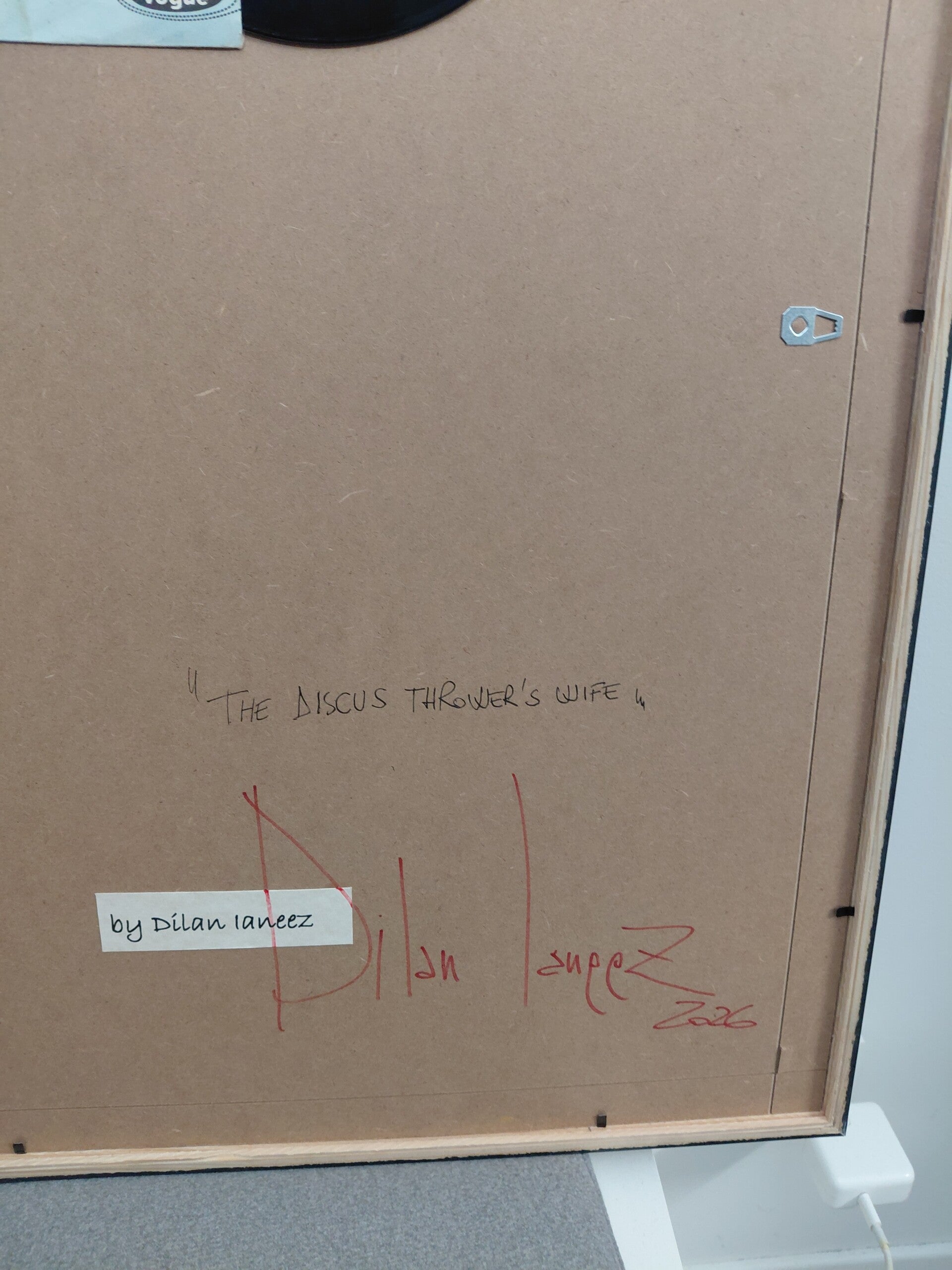
Mentre nel retro del Discobolo c'era la musica beat di Mal, qui l'artista ha applicato la copertina e il vinile originale (Disques Vogue) di Petula Clark con il celebre brano “Ciao Ciao” (versione italiana del successo internazionale Downtown). La scelta di una voce iconica femminile degli anni '60 sposa perfettamente l'essenza del soggetto sul fronte: una "divinità" pop, nostalgica, malinconica ma energica.
Dimensioni 70x100 Realizzato a mano - unico originale Venduto senza cornice
The artist preserves his unmistakable stylistic signature - the fusion of classical sculpture, vinyl records, and black-and-red silhouettes - while introducing a new chromatic and material variation. Compared to the silver background of the first painting (The Discus Thrower), this work is dominated by a warm, luminous golden backdrop. Gold, historically associated with Byzantine sacred art and the works of Gustav Klimt, lends the figure an almost regal or divine presence. The subject is no longer a sharply defined profile, but a three-dimensional classical bust, with hair gathered in an elaborate, flowing bright-red hairstyle, reminiscent of depictions of Roman and Greek goddesses such as Venus or Juno. The artist enriches the figure with textured highlights. The base of the bust is entirely covered in gold glitter, coordinated with the eye and lip makeup. Additional three-dimensional applied elements stand out: a striking gold dangling earring and a circular brooch (or fibula) securing the red drapery on the shoulder. The black 45 rpm records and the softly shaded circles in the background continue to create the hypnotic contrast between the curves of analog music and the painting’s geometric composition. However, the golden background makes the black vinyl records appear even deeper and more lustrous.
Dilan Ianeez plays with mythology and art history by inventing a “wife” for the famous Discobolus statue. It is an ironic and pop-inspired gesture: if he is the discus thrower, she belongs to the same sonic and visual universe. While the reverse side of the Discobolus featured the beat music of Mal, here the artist has applied the original record sleeve and vinyl (Disques Vogue) of Petula Clark featuring the famous song "Ciao Ciao", the Italian version of her international hit "Downtown". The choice of an iconic female voice from the 1960s perfectly complements the essence of the figure on the front: a pop “goddess” - nostalgic, melancholic, yet full of energy.
Dimensions 70×100
Handcrafted - Unique original artwork
Sold unframed